

Hey there! As a supplier of slab moulds, I've seen firsthand how crucial these moulds are in product quality control. In this blog, I'll break down the relationship between slab moulds and product quality control, sharing some insights from my experience in the industry.
Let's start by understanding what slab moulds are. Slab moulds are tools used to shape and form slabs, which can be made from various materials like concrete, plastic, or rubber. They come in different shapes, sizes, and designs to meet the diverse needs of different projects. Whether you're working on a small DIY paving project or a large - scale construction job, having the right slab mould is essential.
One of the key ways slab moulds impact product quality is through precision. High - quality slab moulds are designed with precision in mind. They have well - defined edges and smooth surfaces. When you use a precise slab mould, the slabs you produce will have accurate dimensions. For example, if you're making paving slabs, the length, width, and thickness of each slab need to be consistent. A good mould ensures that every slab comes out the same size, which is crucial for a professional - looking finish. If the mould is not precise, you might end up with slabs that don't fit together properly, leading to gaps or an uneven surface. This can be a major issue, especially in high - traffic areas where safety is a concern.
The material of the slab mould also plays a significant role in product quality. Different materials have different properties, and these properties can affect the final product. For instance, Concrete Slab Mould are very durable and can withstand high - pressure pouring. They are ideal for large - scale production of heavy - duty slabs. However, they can be quite heavy and difficult to handle. On the other hand, plastic slab moulds are lightweight and easy to work with. They are also more flexible, which can be an advantage when you need to create slabs with complex shapes. But they may not be as durable as concrete moulds and might wear out faster with repeated use.
Surface finish is another aspect where slab moulds influence product quality. The surface of the mould determines the texture of the slab. A smooth - surfaced mould will produce a slab with a sleek finish, which is great for modern - looking designs. If you want a more rustic or textured look, you can choose a mould with a textured surface. This is important because the surface finish not only affects the aesthetic appeal of the slab but also its functionality. For example, a textured paving slab provides better traction, reducing the risk of slips and falls.
In addition to precision, material, and surface finish, the durability of the slab mould is vital for maintaining product quality over time. A durable mould can be used multiple times without losing its shape or quality. This is cost - effective in the long run, as you don't have to keep buying new moulds for each project. When a mould starts to wear out, it can lead to defects in the slabs. For example, cracks or chips in the mould can transfer to the slab, making it less attractive and potentially weaker.
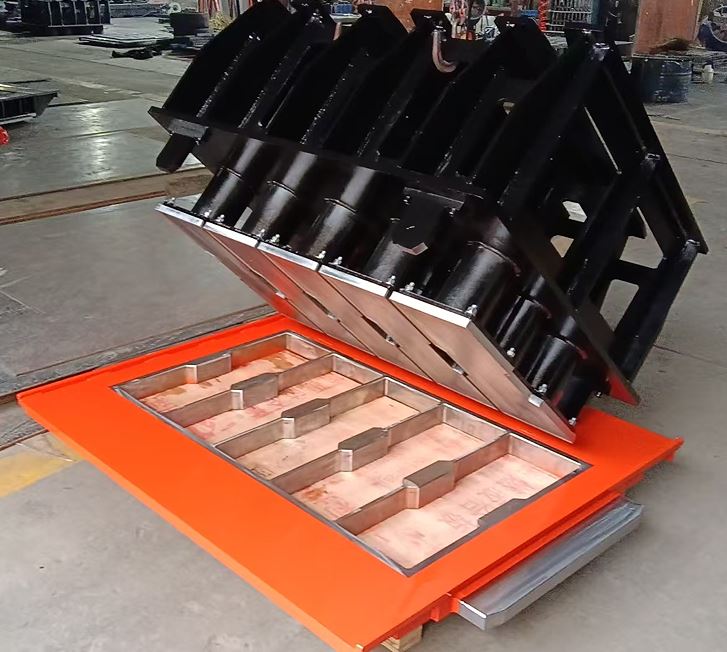

Now, let's talk about how slab moulds can help in quality control during the production process. When you use a high - quality mould, it acts as a standard for the slabs. You can easily compare each slab to the mould to check for any deviations. If a slab doesn't match the mould's specifications, you can identify the problem early and take corrective action. This could involve adjusting the pouring process, checking the material consistency, or inspecting the mould for damage.
Moreover, slab moulds can also help in reducing waste. By producing consistent, high - quality slabs, you minimize the number of defective products. Defective slabs often have to be discarded, which is not only wasteful but also costly. With a good mould, you can increase the yield of usable slabs, which is beneficial for both the environment and your bottom line.
As a slab mould supplier, I've worked with many customers who have different requirements. Some are looking for Paving Slab Moulds for a residential driveway project, while others need Concrete Paving Slab Moulds for a commercial parking lot. In each case, the right mould is essential for achieving the desired quality.
I've seen how the wrong choice of mould can lead to a lot of headaches. For example, a customer once used a low - quality plastic mould for a large - scale project. The mould started to deform after a few uses, and the slabs came out with inconsistent shapes and sizes. This led to delays in the project and additional costs for re - work. On the other hand, when customers choose high - quality moulds from us, they are usually very satisfied with the results. The slabs are of excellent quality, and the project runs smoothly.
If you're in the market for slab moulds, it's important to do your research. Consider the type of project you're working on, the material you'll be using, and your budget. Look for a supplier who offers a wide range of moulds and can provide expert advice. At our company, we have a team of experts who can help you choose the right mould for your needs. We also offer high - quality moulds at competitive prices.
In conclusion, the relationship between slab moulds and product quality control is very strong. The right slab mould can ensure precision, proper surface finish, and durability of the slabs. It can also help in quality control during the production process and reduce waste. If you're looking to produce high - quality slabs for your next project, don't underestimate the importance of choosing the right mould.
If you're interested in discussing your slab mould needs further, feel free to reach out. We're here to help you get the best results for your project.
References
- Industry reports on construction materials and mould manufacturing
- Case studies from various slab production projects