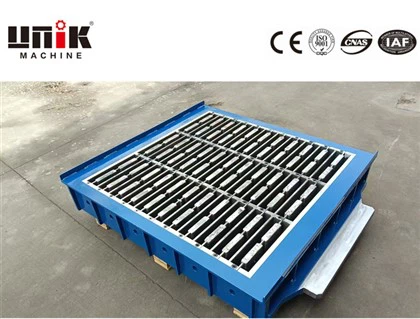
Why Does Your Block Stick to the Mould? (5 Causes and Solutions)
Block sticking is a common challenge in concrete block, hollow block, and paver production. When a finished block fails to separate smoothly from the mould, it can lead to chipped corners, rough surfaces, dimensional defects, production delays, and increased material waste. For manufacturers operating automatic block-making lines, repeated sticking problems can also reduce production efficiency and increase maintenance costs.
Understanding the reasons behind block sticking is the first step toward improving demoulding performance. In most cases, the problem is related to mould surface condition, release agent application, concrete mix consistency, mould design, or machine operation.
This article explores five common causes of block sticking and explains practical solutions for achieving smoother demoulding and more consistent block quality.
1. Insufficient or Improper Mould Release Agent
Why Does It Happen?
A mould release agent creates a separating film between the concrete and the mould cavity. If the agent is missing, applied unevenly, or unsuitable for the production process, cement paste may adhere to the steel surface.
Using too much release agent can also cause problems, including surface stains, uneven finishes, and other defects. Therefore, simply increasing the amount of oil is not always the right solution.
How to Solve It
Choose the right release agent: Use a commercial product designed for concrete block moulding and compatible with your production process.
Apply it evenly: Cover the cavity walls and other contact surfaces with a thin, uniform layer.
Avoid excessive application: Remove accumulated oil and follow the release agent manufacturer's instructions.
Inspect the application system: For automatic production lines, check spray nozzles, pressure, and coverage to ensure consistent application.
A properly selected and evenly applied release agent reduces direct contact between concrete and steel, helping blocks separate more smoothly without compromising their surface quality.
2. Rough, Dirty, or Worn Mould Surfaces
Why Does It Happen?
The inner surface of a concrete block mould directly affects demoulding performance. During repeated production cycles, friction from abrasive aggregates and continuous machine vibration can gradually wear the cavity surface.
Dried cement residue, rust, scratches, and machining marks can create areas where concrete adheres more easily. If these conditions are ignored, the problem may become progressively worse.
How to Solve It
Clean the mould regularly: Remove residual concrete and debris after production, especially around corners, cavity walls, and core pins.
Use appropriate cleaning tools: Avoid aggressive scraping that can scratch precision-machined surfaces.
Inspect surface wear: Look for corrosion, rough patches, dents, and damaged cavity edges.
Restore the surface when necessary: Professional polishing or suitable reconditioning can reduce friction and improve the release characteristics of worn moulds.
Protect the mould during storage: Dry the mould thoroughly and apply appropriate anti-rust protection before storing it in a clean, covered area.
A smooth, clean mould cavity helps reduce friction during ejection and supports a more consistent block finish. Regular inspection also helps manufacturers identify wear before it causes repeated production defects.
3. Incorrect Concrete Mix Consistency
Why Does It Happen?
Concrete mix design has a significant influence on how easily a block releases from its mould. A mixture containing excessive water may become sticky, leaving cement paste on cavity surfaces. Conversely, a mixture that is too dry may not compact properly, resulting in weak edges, incomplete filling, or blocks that break during demoulding.
The appropriate consistency depends on the block type, aggregate grading, cement content, additives, and the requirements of the block-making machine.
How to Solve It
Maintain a consistent mix ratio: Control the proportions of cement, water, sand, and aggregates throughout production.
Monitor moisture content: Check aggregate moisture and adjust the added water accordingly.
Evaluate workability: Use a mix suitable for the vibration and compaction characteristics of the production line.
Use additives carefully: Where appropriate, consult a concrete mix specialist before introducing plasticizers or other admixtures.
Keep feeding conditions consistent: Uneven material distribution can create variations in compaction and block release.
Avoid making large, uncontrolled changes to the water-cement ratio simply to solve sticking. Instead, evaluate the complete mix and compare the results under consistent production conditions.
A stable concrete mix improves compaction, reduces product defects, and helps ensure reliable demoulding.
4. Poor Mould Design or Insufficient Draft Angle
Why Does It Happen?
Mould geometry determines how easily a finished block can move away from the cavity walls. If the cavity has insufficient draft, sharp internal corners, unsuitable clearances, or an inappropriate surface finish, the block may experience excessive resistance during ejection.
These issues can be particularly important for hollow blocks, interlocking pavers, and products with complex profiles or deep cavities.
Mould compatibility also matters. A mould that does not match the block machine's specifications may not release products correctly, even when the mould itself appears to be in good condition.
How to Solve It
Review the draft angle: Ensure that the cavity geometry provides sufficient clearance for the intended block design. The required angle depends on the product, material, and demoulding method.
Optimize cavity finishing: Precision machining and suitable polishing can reduce friction and help prevent surface defects.
Check corners and transitions: Appropriate radii can reduce stress concentrations and minimize damage during ejection.
Verify mould-machine compatibility: Confirm mounting dimensions, cavity configuration, core positions, and demoulding mechanisms before installation.
Consider customized mould design: For complex products or persistent sticking problems, work with a mould manufacturer to review drawings, samples, and operating conditions.
UNIK Mould's product information highlights the importance of suitable draft angles, smooth cavity surfaces, and precision manufacturing in reducing concrete adhesion. Selecting a mould designed for the specific block shape and machine configuration can help improve production reliability.
5. Incorrect Demoulding Timing or Machine Settings
Why Does It Happen?
Even with a clean, well-designed mould and a consistent concrete mix, improper machine settings can cause sticking or block damage.
Insufficient or excessive vibration, uneven compaction, incorrect stripping movement, and inconsistent demoulding timing can all affect the release process. If a block has not developed sufficient stability for the selected demoulding method, it may deform or break as it leaves the cavity.
On the other hand, excessive vibration or unnecessary delays can affect production efficiency and may contribute to other quality problems.
How to Solve It
Follow the machine manufacturer's operating parameters: Establish appropriate vibration, pressure, and stripping settings for the specific product and mix.
Maintain consistent cycle timing: Avoid arbitrary changes to the production cycle without evaluating their effect on block quality.
Inspect the stripping mechanism: Check guide components, core pins, alignment, and moving parts for wear or obstruction.
Verify mould installation: Ensure that the mould is correctly positioned and securely fastened to the machine.
Monitor block quality after each adjustment: Check corners, dimensions, surface finish, and deformation to determine whether the changes improve demoulding.
Rather than increasing vibration or changing several parameters simultaneously, adjust one variable at a time and record the results. This approach makes it easier to identify the actual cause of the sticking problem.
A Quick Troubleshooting Guide
| Symptom | Possible Cause | Recommended Solution |
|---|---|---|
| Concrete sticks to cavity walls | Insufficient or uneven release agent | Apply a suitable release agent evenly |
| Blocks have rough surfaces | Cement residue, scratches, or cavity wear | Clean and inspect the mould; polish if necessary |
| Blocks deform during ejection | Incorrect mix consistency or demoulding settings | Check mix stability and machine parameters |
| Hollow blocks stick around core pins | Residue, wear, misalignment, or inadequate clearance | Clean and inspect core pins and cavity alignment |
| Sticking occurs repeatedly despite lubrication | Poor cavity geometry or excessive surface roughness | Review mould design and consider professional reconditioning |
| Blocks break or lose corners during demoulding | Weak green strength, unsuitable settings, or damaged cavity edges | Check mix, compaction, stripping settings, and mould condition |
How to Prevent Block Sticking in Daily Production
Solving a sticking problem is important, but preventing it from recurring is even more valuable. A consistent mould maintenance and production-control routine can reduce unplanned downtime and protect finished block quality.
1. Clean the mould after production. Remove concrete residue before it hardens and inspect difficult-to-reach areas.
2. Standardize release agent application. Use the recommended product and maintain consistent coverage without excessive oil buildup.
3. Inspect mould surfaces and components. Check cavity walls, corners, core pins, mounting points, and other wear-prone areas regularly.
4. Maintain consistent concrete quality. Monitor aggregate moisture, material proportions, and mixing conditions to reduce variations between batches.
5. Record machine settings and production results. Track vibration, compaction, demoulding timing, and defect rates to identify recurring patterns.
6. Schedule professional maintenance. When cleaning and normal adjustments do not solve the problem, evaluate whether polishing, component replacement, or mould redesign is required.
Choosing the Right Block Mould for Reliable Demoulding
The quality of a block mould affects more than the dimensions and appearance of the finished product. Cavity geometry, surface finish, material selection, heat treatment, and manufacturing precision can all influence wear resistance and demoulding performance.
A well-designed mould should match the block machine and the intended product while providing suitable cavity clearances and a surface finish appropriate for the application. For production environments involving abrasive aggregates and frequent vibration, material durability and appropriate heat treatment are also important considerations.
UNIK Mould provides mould solutions for concrete block and paver production, with product options for different block shapes and manufacturing requirements. When evaluating a mould, manufacturers should consider not only the initial purchase price but also production stability, maintenance requirements, expected service life, and the cost of defective products and downtime.
If block sticking persists despite correct lubrication, cleaning, mix control, and machine adjustment, the mould itself may require a more detailed technical assessment.
Conclusion
Block sticking is rarely caused by a single factor in every production environment. Insufficient release agent, rough or dirty cavity surfaces, inconsistent concrete mixes, unsuitable mould geometry, and incorrect machine settings are five common causes that manufacturers should investigate.
The most effective solution is a systematic one: inspect the mould, verify the release agent, check the concrete mix, review the mould design, and confirm the machine's demoulding settings. Making controlled adjustments and maintaining accurate production records can help identify the root cause rather than treating only the symptoms.
With appropriate mould selection, routine maintenance, and consistent production control, manufacturers can reduce sticking-related defects, improve demoulding efficiency, and maintain more reliable concrete block production.
For more information about concrete block moulds, paver moulds, and customized mould solutions, visit the official website: https://www.unikmould.com/.