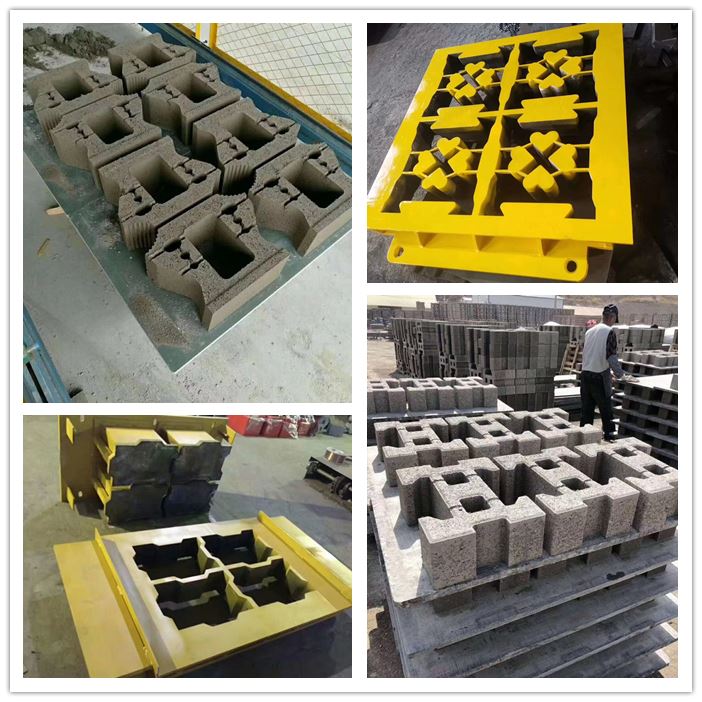
How to Compete in the Concrete Block Mould Market
The concrete block mould market serves a broad range of customers, including concrete block manufacturers, paving stone producers, precast concrete factories, construction contractors, and infrastructure suppliers.
As customers demand more consistent product quality and greater production efficiency, mould suppliers must compete on more than price. Manufacturing precision, material performance, customization, machine compatibility, delivery reliability, and technical support can all influence purchasing decisions.
For manufacturers and suppliers seeking to strengthen their position in the market, understanding these factors is essential. UNIK Mould provides mould solutions for concrete blocks, paving blocks, curb stones, and other precast concrete applications, making product quality and application-specific design important areas of focus.
1. Understand the Needs of Different Customer Segments
Not every customer evaluates concrete block moulds in the same way.
A small block-making business may prioritize affordability and straightforward operation. A large automated factory may place greater emphasis on dimensional accuracy, mould service life, production consistency, and compatibility with its equipment.
Infrastructure projects may require specialized profiles, specific tolerances, or documentation supporting quality control.
Suppliers should identify their target customer segments and develop products that address their actual production requirements.
Useful questions include:
What type of concrete product will the customer manufacture?
Which block-making machine is being used?
What production volume is expected?
Which steel grade and heat treatment are appropriate?
What dimensions and tolerances are required?
What maintenance and replacement support will be needed?
A clear understanding of these requirements helps suppliers recommend appropriate mould solutions instead of competing solely through discounts.
2. Compete Through Manufacturing Precision
Dimensional accuracy is a key factor in the performance of industrial concrete block moulds.
Inconsistent cavity dimensions can lead to variations in block geometry, surface appearance, and compatibility with automated production systems.
Manufacturers can strengthen their competitive position by investing in appropriate machining equipment, controlled production procedures, and reliable inspection systems.
For example, UNIK's paving block mould product information highlights precision machining, dimensional control, and working-surface quality as important features of its industrial moulds.
Suppliers should be prepared to explain their inspection methods and provide relevant measurements or quality documentation when requested.
3. Choose Materials According to the Application
Steel grade and heat treatment influence mould wear resistance, toughness, and service life.
A mould used for highly abrasive concrete mixtures may require different material characteristics from one used for a less demanding application. Similarly, moulds exposed to repeated vibration and mechanical loading must balance surface hardness with resistance to cracking and deformation.
Suppliers should explain why a particular material is suitable for the customer's operating conditions.
Instead of making unsupported claims about maximum service life, provide relevant specifications, testing information, and maintenance recommendations.
Transparent technical communication helps buyers compare products on a meaningful basis.
4. Offer Customization and Flexible Design
Standard moulds are useful for common block dimensions, but many customers require customized shapes or machine-specific configurations.
Customization can include cavity dimensions, interlocking profiles, surface textures, mounting interfaces, and specialized features for precast products.
A supplier that can work from technical drawings or existing mould references may be better positioned to serve customers with unusual requirements.
UNIK offers mould solutions for different applications, including paving blocks, curb stones, and U-shaped drainage channels. These product categories illustrate how application-specific design can help suppliers serve a wider range of production needs.
To manage customization efficiently, establish a clear process for drawing approval, design confirmation, manufacturing, inspection, and delivery.
5. Help Customers Improve Their Total Cost of Ownership
The lowest initial purchase price does not necessarily produce the lowest overall cost.
A mould that wears quickly, requires frequent adjustment, or causes a high rejection rate may increase the cost of every accepted concrete block.
Customers should evaluate the relationship between mould price, service life, maintenance expenses, production downtime, and product defects.
A practical comparison can consider:
Total mould-related cost per accepted product = (purchase cost + maintenance cost + replacement cost + attributable downtime cost) ÷ number of accepted products
The calculation should use realistic production data and avoid counting the same expense twice.
Suppliers can differentiate themselves by helping customers assess these factors and select a mould that suits their actual production conditions.
6. Improve Delivery Reliability and Communication
Production delays can affect customer commitments, especially when moulds are needed for a new production line or an infrastructure project.
Reliable suppliers should provide realistic lead times, communicate technical questions promptly, and establish clear approval milestones.
Before confirming an order, clarify the drawing approval date, manufacturing schedule, inspection requirements, packaging method, and shipping arrangements.
If changes occur, communicate them early and explain their potential impact.
Consistent communication builds customer confidence and helps reduce uncertainty throughout the procurement process.
7. Strengthen Technical Support and After-Sales Service
Customers may need assistance with mould installation, machine compatibility, routine maintenance, or troubleshooting.
Suppliers can build long-term relationships by offering clear operating guidance, maintenance recommendations, and support for replacement components where available.
Technical support is especially valuable when a customer introduces a new block design or changes production equipment.
A responsive after-sales process can also help suppliers identify recurring problems and use customer feedback to improve future designs.
8. Use Digital Marketing to Reach International Buyers
Online visibility is increasingly important for suppliers serving international construction and manufacturing markets.
A professional website should clearly present product categories, technical capabilities, customization options, and contact information.
Useful content may include:
Guides to selecting concrete block moulds.
Explanations of steel grades and heat treatment.
Comparisons of standard and customized moulds.
Maintenance and troubleshooting articles.
Product specifications and application examples.
Search engine optimization can help potential customers discover relevant products when searching for terms such as concrete block mould manufacturer, paving block mould supplier, and custom precast concrete moulds.
Technical articles should answer genuine customer questions and link to relevant product pages. Accurate product information is more valuable than unsupported performance claims or repetitive keyword placement.
9. Build a Reputation Through Verifiable Quality
Trust is an important factor in industrial purchasing.
Suppliers can strengthen their reputation by providing accurate specifications, clear quotations, documented inspection procedures, and realistic statements about product capabilities.
Where applicable, provide material certificates, dimensional inspection reports, or other relevant quality documents.
Product photographs, manufacturing information, and customer case studies can also help buyers understand a supplier's capabilities, provided the information is genuine and authorized for publication.
A consistent commitment to transparency can help distinguish a manufacturer from competitors that rely primarily on low prices.
10. Develop a Long-Term Competitive Strategy
Sustainable competitiveness requires continuous improvement.
Suppliers should monitor customer feedback, defect rates, delivery performance, production costs, and the demand for new mould designs.
Investments in machining precision, production planning, inspection equipment, and technical training may help improve efficiency over time.
It is also important to review market needs regularly. Different regions and industries may require different block geometries, machine configurations, production volumes, and levels of technical support.
By combining product quality with responsive service and a clear understanding of customer needs, mould suppliers can build stronger relationships and improve their position in the market.
Conclusion
Competing in the concrete block mould market requires a balanced strategy that combines manufacturing precision, suitable materials, customization, reliable delivery, technical support, and effective digital marketing.
Suppliers that help customers improve product consistency and control total production costs can create value beyond the initial mould purchase.
To explore concrete block and paving mould solutions, visit UNIK Mould and review the available products for your manufacturing application. Discussing your machine model, block dimensions, production volume, and operating conditions can help identify a suitable mould solution.