

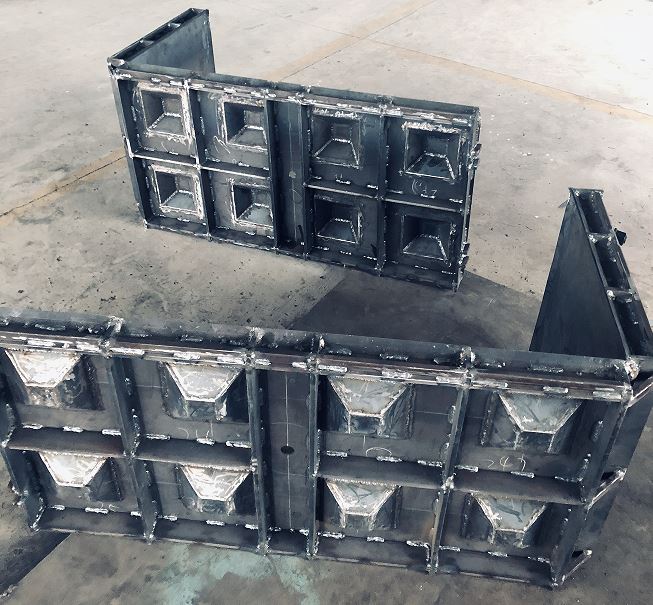
As a seasoned supplier of Barrier Moulds, I've had the privilege of witnessing firsthand the evolution of these essential tools in the construction industry. A well - designed barrier mould is not just a simple container for concrete; it is a precision - engineered product that combines functionality, durability, and cost - effectiveness. In this blog, I'll delve into the key characteristics that define a top - notch barrier mould.
Precision and Accuracy
One of the most crucial characteristics of a well - designed barrier mould is precision. The mould must be able to reproduce the exact shape and dimensions of the barrier every single time. This is essential for ensuring that the barriers fit together seamlessly during installation. Whether it's a small roadside barrier or a large highway median barrier, precision is non - negotiable.
High - quality barrier moulds are typically manufactured using advanced CNC machining techniques. This allows for extremely tight tolerances, often within a few thousandths of an inch. For example, if the design calls for a barrier with a specific height and width, the mould will produce barriers that meet these specifications with remarkable accuracy. This precision not only ensures a proper fit but also enhances the overall aesthetic appeal of the finished barriers.
Durability
Barrier moulds are subjected to a harsh environment. They are constantly exposed to wet concrete, which can be abrasive and corrosive. Additionally, they may be moved around on construction sites, which can cause physical damage. Therefore, durability is a must - have characteristic.
The materials used in the construction of the mould play a significant role in its durability. Steel is a popular choice for barrier moulds due to its high strength and resistance to wear and tear. Stainless steel, in particular, offers excellent corrosion resistance, making it ideal for long - term use. The thickness of the steel also matters; thicker steel can withstand more stress and is less likely to deform over time.
Another aspect of durability is the design of the mould. A well - designed mould will have reinforced corners and edges to prevent cracking and chipping. It will also be designed to distribute the pressure evenly when the concrete is poured, reducing the risk of damage to the mould.
Ease of Use
A well - designed barrier mould should be easy to use. This includes both the process of pouring the concrete and the demoulding process.
When it comes to pouring, the mould should have a design that allows for easy access. For example, it may have wide openings or a tapered shape that makes it easier to pour the concrete in without spillage. The mould should also be designed to minimize air pockets, which can weaken the finished barrier. This can be achieved through features such as proper ventilation holes or a smooth interior surface.
The demoulding process is equally important. A good barrier mould will be designed in such a way that the finished barrier can be removed easily without causing damage to either the mould or the barrier. This may involve using a release agent or having a design that allows for easy separation, such as a split - mould design.
Cost - Effectiveness
In the construction industry, cost is always a major consideration. A well - designed barrier mould should offer a good balance between quality and cost.
On one hand, the initial cost of the mould is important. High - quality materials and advanced manufacturing techniques may increase the upfront cost, but they can also result in a longer - lasting mould, which reduces the need for frequent replacements. On the other hand, the cost of production using the mould should also be considered. A mould that is easy to use and requires less labor and materials to produce barriers will be more cost - effective in the long run.
Versatility
A well - designed barrier mould may offer some degree of versatility. It could be used to produce different types of barriers or be adaptable to different construction requirements. For example, some moulds can be adjusted to change the height or width of the barrier, allowing for greater flexibility on the construction site.
Compatibility with Concrete
The mould should be compatible with the type of concrete used. Different types of concrete have different properties, such as setting time, strength, and shrinkage. A well - designed mould will take these properties into account. For example, if a fast - setting concrete is used, the mould should be designed to allow for quick pouring and demoulding to prevent the concrete from hardening inside the mould.
Safety Features
Safety is paramount in any construction project. A well - designed barrier mould should have safety features to protect the workers. This may include smooth edges to prevent cuts, and proper handling points to make it easier and safer to move the mould around.
In conclusion, a well - designed barrier mould is a complex product that combines multiple characteristics. Precision, durability, ease of use, cost - effectiveness, versatility, compatibility with concrete, and safety features are all essential for a top - notch barrier mould.
If you're in the market for high - quality barrier moulds, we are here to help. We offer a wide range of moulds, including Concrete Lego Block Moulds, Precast Concrete Moulds, and Large Concrete Block Moulds. Our team of experts can work with you to understand your specific requirements and provide the best solutions. Contact us today to start a procurement discussion and take your construction projects to the next level.

References
- "Concrete Construction Handbook" by Edward G. Nawy
- "Mould Design and Manufacturing Technology" by various authors