Where can I buy precast steel moulds?
Precast steel moulds are essential tools in modern concrete manufacturing. They are used to produce concrete slabs, beams, columns, wall panels, kerbs, and other precast components for construction and infrastructure projects. For manufacturers, choosing the right mould supplier can directly influence production efficiency, dimensional accuracy, product quality, and long-term operating costs.
So, where can you buy reliable precast steel moulds? Buyers can source them from specialized mould manufacturers, construction equipment suppliers, or online industrial suppliers. For businesses that require customized designs and consistent manufacturing quality, purchasing directly from an experienced mould manufacturer is often a practical choice.
UNIK Mould, a China-based concrete mould manufacturer, provides precast steel mould solutions for different production requirements. This guide explains where to purchase precast steel moulds, what to look for in a supplier, and how to select the right mould for your business.
1. Where to Buy Precast Steel Moulds
There are several ways to purchase precast steel moulds. Each option has advantages depending on your project specifications, budget, and production schedule.
Buy Directly from a Specialized Manufacturer
Purchasing directly from a mould manufacturer allows buyers to discuss technical requirements with the team responsible for design and production. This is particularly useful when standard moulds cannot meet specific dimensions, structural requirements, or surface finish expectations.
A specialized manufacturer can help evaluate drawings, recommend suitable mould configurations, and clarify material specifications before production begins.
When purchasing directly, consider the following factors:
Manufacturing experience and technical capabilities.
Steel quality and processing methods.
Machining accuracy and dimensional inspection.
Customized design and sample-based manufacturing.
Maintenance guidance and replacement component availability.
UNIK Mould offers standard and customized precast steel moulds for concrete products such as beams, panels, and slabs.
Visit the UNIK Mould Precast Steel Moulds page to explore its product information and submit an inquiry.
Purchase through Construction Equipment Suppliers
Some construction equipment suppliers provide moulds alongside concrete batching equipment, casting systems, and other machinery.
This option may be convenient when purchasing several types of equipment for a new precast concrete factory. However, buyers should confirm whether the supplier manufactures the moulds directly or sources them from another company.
It is also important to clarify who will provide technical support, replacement parts, and assistance if the mould requires adjustments.
Find Suppliers through Online Research
Online research allows buyers to compare mould manufacturers, review product categories, and request quotations without traveling to different factories.
When evaluating supplier websites, look for detailed product descriptions, manufacturing information, customization options, and clear contact details.
For international purchases, confirm shipping arrangements, protective packaging, lead times, and the documentation required for importation.
2. What Types of Precast Steel Moulds Can You Buy?
The right mould depends on the type of concrete component you intend to manufacture. Different products require different mould structures, dimensions, and casting arrangements.
Precast Slab Moulds
Precast slab moulds are used to manufacture concrete components for floors, roofs, and other building applications. Accurate dimensions and suitable surface finishes help ensure consistency across production batches.
Precast Beam and Column Moulds
Beam and column moulds form structural concrete components according to engineering drawings. Their design must accommodate the required dimensions, reinforcement arrangements, concrete placement methods, and demoulding procedures.
Precast Wall Panel Moulds
Wall panel moulds are used to manufacture concrete panels for residential, commercial, and industrial buildings. Depending on the product design, the mould may require openings, embedded components, or specialized surface textures.
Concrete Kerb and Drainage Moulds
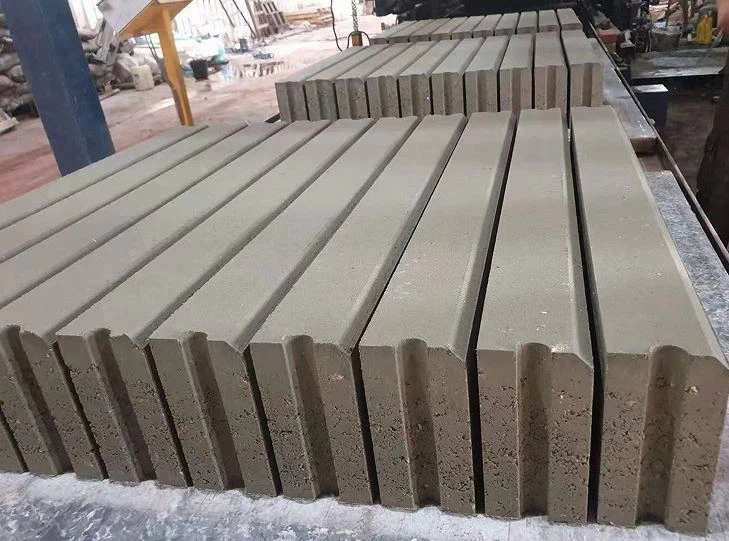
Steel moulds can also be used to produce concrete kerbs, gutters, and selected drainage components for road construction and infrastructure projects. Accurate profiles help ensure that finished products meet installation requirements.
Customized Precast Steel Moulds
Some projects require non-standard dimensions, complex shapes, or special surface finishes. In these situations, customized moulds can be designed according to engineering drawings, technical sketches, or physical samples.
UNIK Mould provides mould solutions for different concrete manufacturing requirements, allowing buyers to discuss their specific product dimensions and production needs.
3. Why Choose Steel Moulds for Precast Concrete Production?
Steel is widely used in industrial precast concrete production because of its strength, rigidity, and suitability for repeated casting operations.
Several characteristics make steel moulds a practical choice for manufacturers.
Durability and structural stability
Properly designed steel moulds can withstand repeated concrete placement, handling, and demoulding operations. Suitable materials and manufacturing processes help maintain the mould's geometry during continued use.
Consistent product dimensions
Precision-machined mould components help reduce dimensional variations between concrete products. This is especially important when precast components must fit together accurately during construction.
Improved surface finish
Smooth, properly finished mould surfaces can facilitate demoulding and contribute to the appearance of the finished concrete component.
Reusable construction
Steel moulds can be reused over multiple production cycles when operated and maintained correctly. This helps manufacturers distribute tooling costs across larger production volumes.
Flexible design options
Steel moulds can be manufactured in different sizes and configurations to accommodate standard concrete components and specialized project requirements.
According to UNIK Mould's product information, its manufacturing processes include CNC machining, wire-cutting, heat treatment, surface finishing, and dimensional inspection. These processes help support the accuracy and durability required for industrial production.
4. How to Choose a Reliable Precast Steel Mould Supplier
Finding a supplier is only the first step. Buyers should also verify whether the manufacturer can meet the project's technical and commercial requirements.
Check Steel Quality and Material Specifications
Ask the supplier which steel grade is used and how the material is processed. The appropriate choice depends on the component being manufactured, expected production volume, and operating conditions.
For demanding applications, buyers should also understand the role of heat treatment and surface finishing in mould performance.
Confirm Dimensional Accuracy
Provide engineering drawings showing the overall dimensions, thicknesses, openings, connection points, and critical tolerances.
Before ordering, confirm that the supplier can manufacture and inspect the mould according to the agreed specifications. This helps reduce the risk of dimensional or assembly problems.
Evaluate Manufacturing Capabilities
A reliable manufacturer should be able to explain its production process and quality-control procedures.
Relevant considerations include machining equipment, welding quality, heat treatment where applicable, surface finishing, and dimensional inspection.
For customized moulds, reviewing the final technical drawing before manufacturing is particularly important.
Ask About Maintenance and Replacement Components
Moulds experience wear during repeated production. Ask whether worn components can be replaced, whether refurbishment is available, and what maintenance guidance the supplier provides.
UNIK Mould lists modular inserts, replacement options, refurbishment, and maintenance guidance among the features and support services associated with its precast steel moulds. Confirm the exact options available for your selected design.
Review Delivery and After-Sales Support
For overseas orders, clarify the production lead time, rust protection, export packaging, shipping arrangements, warranty conditions, and technical assistance.
These details are important when mould delivery must align with factory installation or a scheduled production start.
5. Why Consider UNIK Mould?
UNIK Mould specializes in concrete mould manufacturing, supplying products for precast concrete and other construction applications.
Its precast steel moulds are designed to produce components such as beams, panels, and slabs, with standard sizes and customized designs available for different project requirements.
Several capabilities are worth considering when evaluating the company.
Precision manufacturing: CNC machining and wire-cutting help produce mould components with controlled dimensions and alignment.
Steel construction: Appropriate material selection and processing methods support repeated use under suitable operating conditions.
Quality inspection: The company identifies dimensional, flatness, alignment, and hardness checks among its manufacturing quality-control procedures.
Custom design options: Buyers can discuss requirements based on standard specifications, technical drawings, or samples.
After-sales support: Available support options include installation guidance, maintenance recommendations, replacement inserts, and refurbishment services.
For additional information, visit the official UNIK Mould website.
6. How to Order Precast Steel Moulds from UNIK Mould
Preparing technical information before requesting a quotation can make the purchasing process more efficient.
Step 1: Identify Your Application
Specify whether you need moulds for slabs, beams, columns, wall panels, kerbs, drainage components, or another precast product.
Include the intended application and expected production volume.
Step 2: Provide Technical Drawings
Send CAD drawings or detailed sketches showing the required dimensions, tolerances, openings, and surface finish.
If drawings are unavailable, ask whether photographs, measurements, or physical samples can be used to assess your requirements.
Step 3: Explain Your Production Conditions
Share information about the concrete product, casting method, reinforcement arrangement, demoulding process, and operating environment.
These details help the manufacturer evaluate the appropriate mould structure and material specifications.
Step 4: Request a Detailed Quotation
Ask the supplier to confirm the mould specifications, material, price, manufacturing lead time, packaging, shipping terms, and warranty conditions.
For customized moulds, request a final technical drawing and review it before authorizing production.
Step 5: Confirm Delivery and Installation Arrangements
Before shipment, clarify the inspection procedures, rust protection, export packaging, and delivery arrangements. Confirm whether installation instructions or technical assistance are available.
Following these steps helps reduce purchasing risks and ensures that the selected mould is appropriate for your production requirements.
7. How Much Do Precast Steel Moulds Cost?
The price of a precast steel mould depends on its dimensions, material, design complexity, manufacturing requirements, and order quantity.
Important cost factors include:
Mould size and weight: Larger moulds generally require more material and may involve higher handling and transportation costs.
Steel grade and thickness: Material selection influences manufacturing costs and expected performance.
Design complexity: Special shapes, multiple cavities, and tight tolerances may require additional engineering and machining.
Manufacturing processes: Welding, CNC machining, heat treatment, and surface finishing contribute to the final price.
Customization requirements: Non-standard designs may involve additional engineering and inspection.
Packaging and transportation: Export packaging, freight, and import-related expenses affect the total purchasing cost.
When comparing quotations, evaluate the complete package rather than the initial purchase price alone.
A mould that maintains dimensional accuracy, performs reliably over repeated cycles, and requires less frequent repair may offer better long-term value.
For an accurate quotation, contact UNIK Mould with your product drawings, dimensions, and expected production requirements.
Conclusion
If you are looking for precast steel moulds, purchasing directly from a specialized manufacturer can be a practical way to obtain tooling suited to your concrete production needs.
The most important considerations are material quality, dimensional accuracy, manufacturing capabilities, customization options, maintenance support, and delivery arrangements.
UNIK Mould provides precast steel mould solutions for slabs, beams, panels, and other concrete applications. With standard and customized designs available, buyers can discuss their requirements and identify a suitable mould configuration.
Whether you are establishing a new precast concrete factory, expanding your product range, or replacing existing moulds, start by defining your technical specifications and comparing suppliers based on quality and long-term value.
Looking for precast steel moulds for your next project?
Visit www.unikmould.com to explore product information and submit an inquiry about your requirements.