

As a reputable curb stone mould supplier, I understand the significance of high - quality moulds in the construction industry. A well - made curb stone mould not only ensures the production of durable and aesthetically pleasing curb stones but also contributes to the overall efficiency of the manufacturing process. In this blog, I will share some essential methods on how to check the quality of a new curb stone mould.
1. Material Inspection
The quality of the material used in the curb stone mould is the foundation of its overall performance.
Metal Moulds
For metal curb stone moulds, common materials include steel and iron. First, check the surface finish of the metal. A smooth surface indicates that the metal has been properly treated, which is crucial for easy demoulding of the curb stones. Any rough spots or burrs can cause damage to the surface of the produced curb stones.
Examine the thickness of the metal. A thicker metal generally means greater strength and durability. However, it's important to ensure that the thickness is uniform throughout the mould. Uneven thickness can lead to inconsistent heat distribution during the concrete pouring process, resulting in defective curb stones.
Also, look for signs of corrosion. Even a small amount of rust on the metal can spread over time and compromise the integrity of the mould. If the mould is supposed to be coated for protection, check that the coating is intact and evenly applied.
Plastic Moulds
Plastic curb stone moulds are popular due to their lightweight and cost - effectiveness. When inspecting a plastic mould, check for any visible cracks or deformities. Cracks can cause leakage during the concrete pouring process, leading to incomplete or misshapen curb stones.
The hardness of the plastic is also an important factor. A high - quality plastic mould should be hard enough to withstand the pressure of the concrete but still have some flexibility to allow for easy demoulding. You can test the hardness by gently pressing on a non - critical area of the mould. If it deforms too easily, it may not be of good quality.
Another aspect is the color of the plastic. A consistent color usually indicates a more uniform manufacturing process. Discoloration or uneven coloring may be a sign of poor material quality or improper production conditions.
2. Dimensional Accuracy
Accurate dimensions are crucial for curb stone moulds. The produced curb stones need to fit precisely into the intended construction project.
Measuring Tools
Use appropriate measuring tools such as calipers, rulers, and gauges to measure the key dimensions of the mould. Check the length, width, and height of the mould cavity. The tolerance for dimensional accuracy should be within the industry standards. For most curb stone moulds, a tolerance of ± 1mm is acceptable, but this may vary depending on the specific requirements of the project.
Corner and Edge Inspection
Pay special attention to the corners and edges of the mould. They should be sharp and well - defined. Rounded corners or uneven edges can result in curb stones with poor appearance and defective fitting. For example, in a Kerb Stone Mould, the edges of the mould need to be straight and smooth to ensure the production of high - quality kerb stones.
Alignment
Check the alignment of different parts of the mould, especially if it is a multi - piece mould. Misaligned parts can cause problems during the concrete pouring process, such as uneven filling and leakage. Make sure that all the components fit together perfectly and that there are no gaps or offsets.
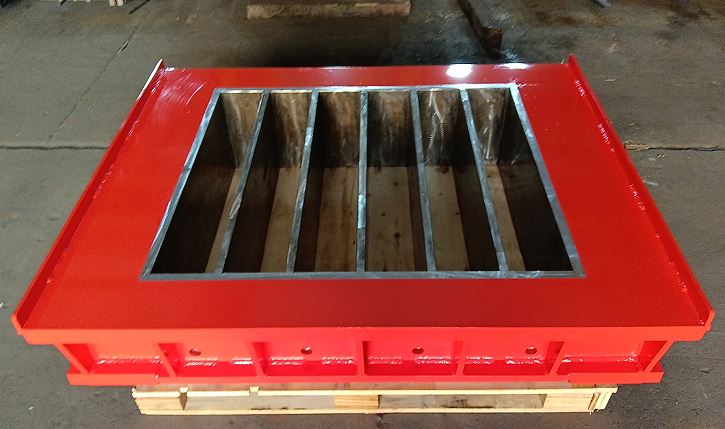

3. Structural Integrity
A curb stone mould needs to have a strong and stable structure to withstand the pressure of the concrete during pouring and curing.
Reinforcement
If the mould has reinforcement elements such as ribs or braces, check their quality and placement. The reinforcement should be firmly attached to the main body of the mould and evenly distributed. Weak or poorly placed reinforcement can cause the mould to warp or break under the pressure of the concrete.
Joints and Seams
Inspect the joints and seams of the mould. In a multi - piece mould, the joints should be tight and leak - proof. Any gaps in the joints can lead to concrete leakage, which not only wastes materials but also affects the quality of the produced curb stones. You can test the tightness of the joints by applying a small amount of pressure around the seams and checking for any signs of movement or looseness.
4. Surface Finish
The surface finish of the mould directly affects the appearance of the produced curb stones.
Smoothness
A smooth surface finish on the mould is essential for creating curb stones with a high - quality appearance. Rough surfaces can transfer their texture to the curb stones, making them look unappealing. Use your hand to feel the surface of the mould. It should be free of any bumps, scratches, or pits.
Release Agent Compatibility
The mould should be compatible with the release agent used in the production process. A good release agent helps in easy demoulding of the curb stones without damaging the surface of the mould or the stones. You can test the release agent compatibility by applying a small amount of the release agent to the mould surface and then pouring a small amount of concrete into the mould. After the concrete has cured, check if the demoulding process is smooth and if there are any residues left on the mould or the curb stone.
5. Performance Testing
Before fully committing to a new curb stone mould, it's advisable to conduct some performance tests.
Concrete Pouring Test
Conduct a small - scale concrete pouring test using the mould. Observe the filling process. The concrete should flow smoothly into all parts of the mould without any blockages or air pockets. After the concrete has cured, check the quality of the produced curb stone. It should have a uniform shape, smooth surface, and no visible defects such as cracks or voids.
Demoulding Test
Test the demoulding process. A high - quality mould should allow for easy demoulding of the curb stone without causing any damage to the stone or the mould itself. If the demoulding is difficult, it may indicate problems with the surface finish of the mould or its design.
6. Supplier Reputation and Certification
While inspecting the physical aspects of the mould is important, the reputation of the supplier and the certifications of the mould also matter.
Supplier Reputation
Research the supplier's reputation in the market. Look for customer reviews and testimonials. A supplier with a good reputation is more likely to provide high - quality products and reliable after - sales service. You can also ask for references from the supplier and contact their previous customers to get first - hand information about their products.
Certifications
Check if the mould has relevant certifications. Certifications such as ISO 9001 indicate that the manufacturer follows strict quality management systems. Other industry - specific certifications may also be available depending on the region and the application of the curb stone moulds.
In conclusion, checking the quality of a new curb stone mould involves a comprehensive inspection of its material, dimensions, structure, surface finish, and performance. By following these steps, you can ensure that you are getting a high - quality mould that meets your production needs.
If you are in the market for high - quality Concrete Curb Mould or Concrete Kerb Moulds For Sale, we are here to assist you. Our team of experts can provide you with detailed information about our products and help you choose the most suitable mould for your project. Contact us today to start discussing your procurement needs and take the first step towards successful construction projects.
References
- Construction Industry Handbook: Moulds and Forms
- Best Practices in Curb Stone Manufacturing
- Quality Control Guidelines for Curb Stone Moulds