

As a dedicated supplier of Benton Block Moulds, I've witnessed firsthand the pivotal role these moulds play in the construction industry. One of the most critical properties that determine their performance is adhesion resistance. In this blog, we'll delve deep into what adhesion resistance means for Benton Block Moulds, why it matters, and how it impacts the overall quality of block production.
Understanding Adhesion Resistance
Adhesion resistance refers to the ability of a Benton Block Mould to prevent the sticking of concrete or other construction materials to its surface during the block - making process. When concrete is poured into the mould to form blocks, there is a natural tendency for it to adhere to the mould walls. This adhesion can cause a multitude of problems if not properly managed.
The process of block making involves filling the mould with a carefully mixed concrete slurry. Once the concrete sets, the block needs to be removed from the mould intact. If the adhesion between the concrete and the mould is too strong, it can lead to difficulties in demoulding. This may result in damaged blocks, with parts of the block remaining stuck to the mould or having rough, uneven surfaces.
Factors Affecting Adhesion Resistance
Surface Finish
The surface finish of the Benton Block Mould is a crucial factor in determining its adhesion resistance. A smooth surface finish reduces the contact area between the concrete and the mould, minimizing the chances of adhesion. Moulds with a high - quality polish or a specialized coating can significantly enhance adhesion resistance. For example, some moulds are treated with a non - stick coating that creates a barrier between the concrete and the mould surface, making it easier for the block to be removed once it has set.
Material Composition
The material from which the Benton Block Mould is made also plays a vital role. Different materials have different surface energies, which affect how well concrete adheres to them. For instance, steel moulds, like our Steel Block Mould for Block Making Machine, have a relatively low surface energy compared to some other materials. This low surface energy makes it more difficult for the concrete to bond strongly to the mould surface, resulting in better adhesion resistance.
Concrete Properties
The properties of the concrete itself can impact adhesion resistance. The water - cement ratio, aggregate type and size, and the presence of additives all influence how the concrete behaves in contact with the mould. A concrete mix with a high water - cement ratio may be more likely to adhere to the mould due to its higher fluidity and the potential for greater penetration into the surface pores of the mould. On the other hand, a well - designed concrete mix with appropriate additives can reduce adhesion.
Importance of Adhesion Resistance in Block Production
Quality of Blocks
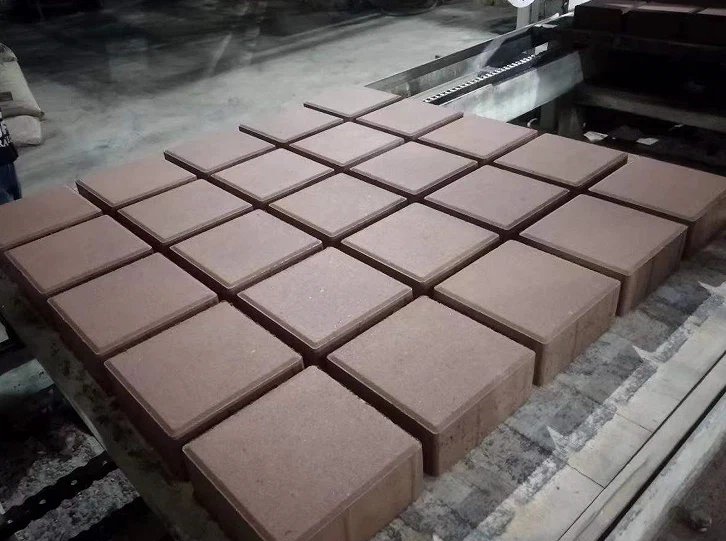
Adhesion resistance directly affects the quality of the blocks produced. When the mould has good adhesion resistance, the blocks can be demoulded easily and intact. This results in blocks with smooth surfaces, accurate dimensions, and consistent quality. High - quality blocks are essential for construction projects, as they ensure better structural integrity and aesthetic appeal. For example, in Block Paving Mould applications, smooth and well - formed blocks are crucial for creating a durable and visually appealing pavement.
Productivity
Poor adhesion resistance can lead to significant delays in the block - making process. If blocks are difficult to remove from the mould, additional time and effort are required for demoulding. This can slow down production rates and increase labor costs. In contrast, moulds with excellent adhesion resistance allow for quick and efficient demoulding, enabling higher production volumes in a shorter period. This is especially important for large - scale construction projects where time is of the essence.
Mould Longevity
Adhesion between the concrete and the mould can cause wear and tear on the mould surface. When blocks are forcibly removed from a mould with high adhesion, it can scratch or damage the mould. Over time, this can reduce the lifespan of the mould and increase the need for replacement. By ensuring good adhesion resistance, the mould can be used for a longer period, reducing the overall cost of block production.
Measuring Adhesion Resistance
There are several methods to measure the adhesion resistance of Benton Block Moulds. One common approach is the pull - off test. In this test, a small sample of concrete is cast in the mould, and once it has set, a force is applied to pull the concrete away from the mould. The amount of force required to separate the concrete from the mould is a measure of the adhesion resistance.
Another method is the visual inspection of the block surface after demoulding. A block that comes out of the mould cleanly with minimal signs of sticking indicates good adhesion resistance. Any signs of concrete residue on the mould or damage to the block surface can be an indication of poor adhesion resistance.
Enhancing Adhesion Resistance
Coatings and Treatments
Applying specialized coatings to the Benton Block Mould can significantly improve its adhesion resistance. These coatings can be made from various materials, such as polymers or ceramics, and are designed to create a smooth, non - stick surface. Some coatings also have anti - corrosion properties, which can further extend the life of the mould.
Regular Maintenance
Proper maintenance of the mould is essential for maintaining good adhesion resistance. This includes cleaning the mould after each use to remove any concrete residue. Regular inspections can also help identify any signs of wear or damage to the mould surface, which can be addressed promptly to prevent a decrease in adhesion resistance.
Applications of Benton Block Moulds with Good Adhesion Resistance
Benton Block Moulds with high adhesion resistance are used in a wide range of applications. In Pavement Block Moulds applications, they are used to create blocks for sidewalks, driveways, and parking lots. The good adhesion resistance ensures that the blocks are of high quality and can be produced efficiently.
In the construction of retaining walls and building facades, these moulds are used to create blocks with precise dimensions and smooth surfaces. The ability to produce high - quality blocks is crucial for the structural integrity and aesthetic appeal of these structures.

Conclusion
Adhesion resistance is a fundamental property of Benton Block Moulds that has a profound impact on the quality of blocks produced, productivity, and the longevity of the moulds. As a supplier, we understand the importance of providing moulds with excellent adhesion resistance to meet the needs of our customers.
If you're in the market for high - quality Benton Block Moulds with superior adhesion resistance, we invite you to get in touch with us. Our team of experts can provide you with detailed information about our products and help you choose the right moulds for your specific requirements. Whether you're a small - scale contractor or a large construction company, we have the solutions to meet your block - making needs.
References
- ASTM International. (Year). Standard test methods for evaluating adhesion resistance of construction moulds. ASTM Publication.
- Concrete Construction Handbook. (Year). A comprehensive guide to concrete properties and mould - related issues.