

Hey there! As a supplier of Benton Block Moulds, I've been getting a lot of questions lately about the elasticity of these moulds. So, I thought I'd take a moment to break it down and share some insights with you all.
First off, let's talk about what elasticity means in the context of block moulds. Elasticity refers to the ability of a material to deform under stress and then return to its original shape once the stress is removed. In the case of Benton Block Moulds, this is a crucial property because it affects how well the moulds can withstand the pressure of the concrete or cement mixture during the block - making process.
When we're producing blocks, the moulds are filled with a wet mixture of concrete or cement. This mixture exerts a certain amount of pressure on the walls of the mould. If the mould isn't elastic enough, it might crack or break under this pressure. On the other hand, if it's too elastic, it could deform in a way that affects the shape and dimensions of the blocks being produced.
So, what makes Benton Block Moulds have the right kind of elasticity? Well, it all starts with the materials we use. We use high - quality polymers and resins that are specifically formulated to have the optimal level of flexibility and resilience. These materials are carefully selected and tested to ensure that they can handle the rigors of the block - making process.
One of the key benefits of the elasticity of our Benton Block Moulds is that it allows for easy demoulding. When the concrete or cement has set, the elastic nature of the mould allows it to be flexed slightly, which helps in releasing the block without causing any damage to the block or the mould itself. This not only makes the production process more efficient but also reduces the chances of having defective blocks.
Another advantage is that the elasticity helps in maintaining the shape of the blocks. Since the mould can deform slightly to accommodate the expansion and contraction of the concrete during the curing process, the final blocks come out with consistent dimensions and smooth surfaces. This is especially important for applications where precision is key, such as in construction projects.
Now, let's take a look at some of the different types of block moulds we offer and how their elasticity plays a role.
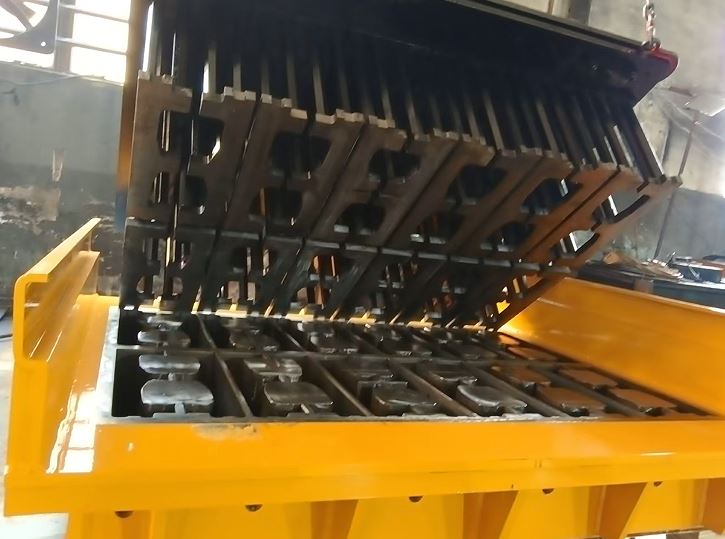
We have the Concrete Hollow Block Mould. These moulds are designed to create hollow concrete blocks, which are widely used in construction for their lightweight and insulating properties. The elasticity of these moulds ensures that the hollow sections of the blocks are formed correctly and that the walls of the blocks are of uniform thickness.
Our Cement Block Moulds are also known for their excellent elasticity. Cement blocks are often used for load - bearing walls and other structural applications. The right amount of elasticity in these moulds helps in producing strong and durable blocks that meet the required standards.
And then there are the Mould for Concrete Blocks. These are general - purpose moulds that can be used to create a variety of concrete block shapes and sizes. The elasticity of these moulds makes them versatile and suitable for different production requirements.
In addition to the material, the design of the Benton Block Moulds also contributes to their elasticity. We use advanced engineering techniques to create moulds with a uniform wall thickness and a shape that distributes the pressure evenly during the block - making process. This further enhances the durability and performance of the moulds.
We also conduct regular quality control checks to ensure that each and every Benton Block Mould meets our high standards of elasticity and other properties. Our team of experts uses state - of - the - art testing equipment to measure the elasticity, strength, and other characteristics of the moulds.
If you're in the business of block production, you know how important it is to have reliable and high - quality moulds. The elasticity of Benton Block Moulds gives you the peace of mind that your production process will run smoothly and that you'll be able to produce blocks of the highest quality.
Whether you're a small - scale block producer or a large construction company, our Benton Block Moulds are a great investment. They offer long - term value and can help you increase your productivity and profitability.
So, if you're interested in learning more about our Benton Block Moulds or if you're ready to place an order, don't hesitate to get in touch. We're here to answer all your questions and to assist you in finding the right moulds for your specific needs. Just reach out to us, and we'll start the conversation about how we can work together to take your block production to the next level.
References

- Engineering Principles of Polymer - Based Block Moulds, Journal of Construction Materials Science
- Best Practices for Block Mould Design and Manufacturing, International Construction Technology Review